
The Two Ways Keyword Search Fails You
Keyword search fails in two directions: false positives waste your time, false negatives cost you the hire. Here's why and what to search for instead.

Every recruiter has had this experience. You run a search on Naukri or LinkedIn. 400 results come back. You work through them, shortlist 30, start calling. By the end of the week, none of them are quite right, and somewhere in the back of your mind, you know the person you're looking for is out there. You just haven't found them yet.
Most recruiters blame the market. The market is thin. The talent doesn't exist. The salary band is wrong.
Sometimes that's true. Often, it isn't. The problem is the search.
The Twin Failure
Keyword search fails in two directions at once, and the compounding effect is what makes it so costly.
The first failure is false positives — candidates who appear in your results because they wrote the right keywords, but don't have the underlying experience. They optimised their profile. They used the JD language. The search returned them. Only after the call do you realise the mismatch.
The second failure is false negatives — candidates who have exactly the experience you need, but described their work the way practitioners describe it rather than the way JDs write it. They don't show up. You never call them. You don't even know they exist.
False positives waste your time. False negatives cost you the hire.
The first failure is visible and measurable. The second is invisible, which is why it's more dangerous.
A Concrete Example
You're sourcing for a Credit Risk Manager at a mid-size NBFC. You search 'credit risk manager' on Naukri, add 'NPA' and 'RBI guidelines' to the boolean. You get 340 results.
In those results: analysts who listed every keyword from three job postings they applied to. Profiles where 'credit risk' appears in the objective statement and nowhere else.
Not in those results: the person who spent 7 years at a PSU bank running PD/LGD model calibration under Basel III — writing 'scorecards,' 'provision coverage ratio,' 'CIBIL pulls,' and 'watchlist accounts' across their profile. They never wrote 'credit risk manager.' Every job found them through their internal network. They didn't need to.
That person is the most qualified candidate for your role. Your search missed them.
Why This Happens
Job descriptions are written by people who have observed a role, not done it. The vocabulary in a JD reflects what the hiring manager thinks the role requires — sanitised, formalised, role-category language that tells you the function but not the craft.
Practitioners describe their work differently. They use the specific terminology of their domain, the tools, the frameworks, the regulatory references, the internal jargon of the function. That vocabulary is precise, experience-specific, and almost never appears in job descriptions.
When you search with JD language, you find JD-optimised profiles. The practitioners who describe their work honestly, without gaming the system, don't show up.
The Signal Alternative
Signal-based sourcing starts from a different question. Instead of 'what title and keywords should I search for?', it asks: what does a practitioner who has actually done this work write about themselves?
The answer to that question is different from the JD. It includes the specific tools they use, the regulatory bodies they reference, the internal terminology of their function, the way they describe outcomes rather than responsibilities.
Those are the signals. They can't be faked by someone who hasn't done the work. They're also the vocabulary your search is currently missing.
Searching in practitioner vocabulary instead of JD vocabulary doesn't guarantee you find the right person. But it changes the population of candidates you're looking at — from people who learned the keywords to people who did the work.
That's a materially different starting point for a sourcing search.
What to Do With This
For any role you're currently sourcing:
Pull the job description.
Identify every phrase that sounds like it was written for a job posting rather than by someone doing the job.
For each of those phrases, ask: what would a practitioner actually write instead?
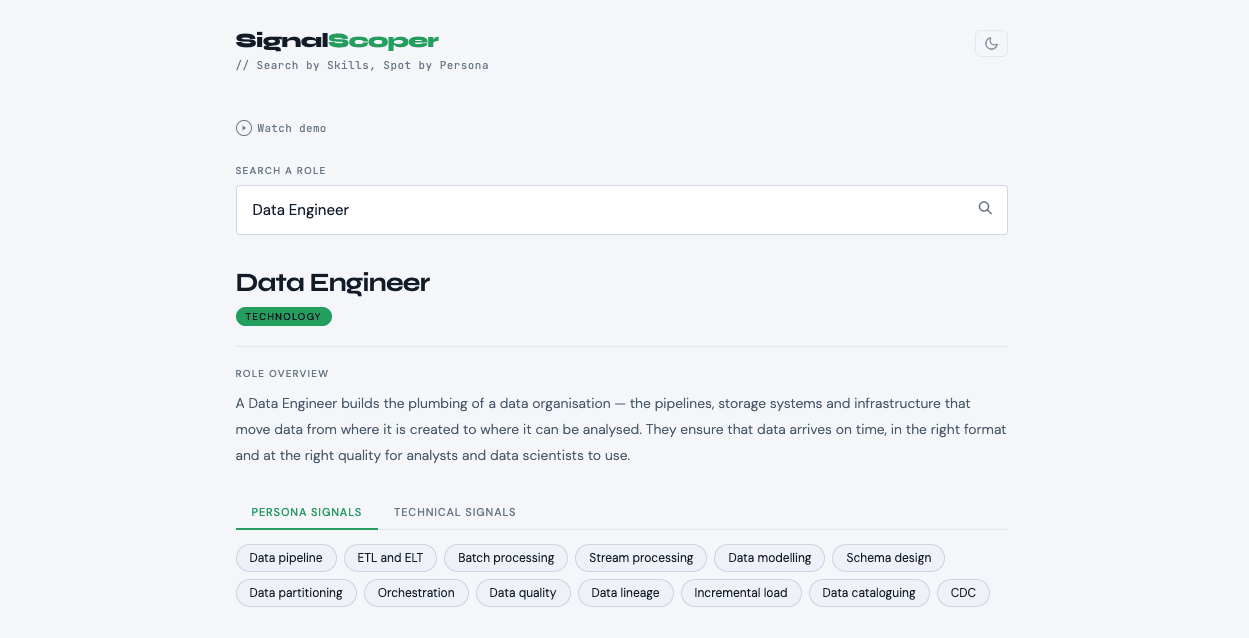
That exercise surfaces the signal vocabulary. It's not always obvious, which is why we built SignalScoper, a free tool that maps practitioner-level signals across 228 roles in Technology, BFSI, Healthcare & Pharma, and Manufacturing & Engineering.
But you don't need the tool to start. You need the habit of questioning whether you're searching in the right vocabulary.
The market is often less thin than the search makes it look.
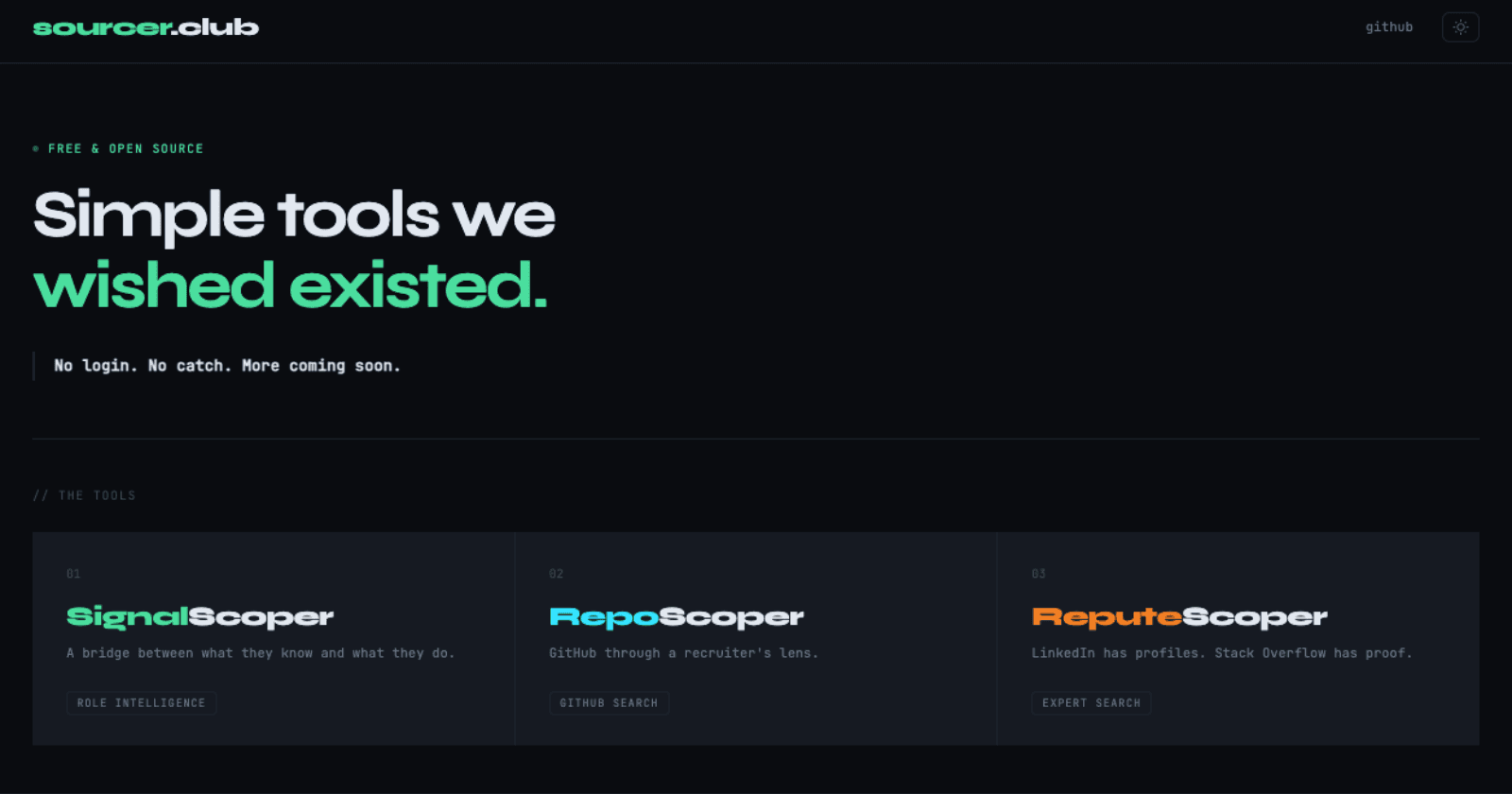
*Sourcer.club builds free sourcing tools for recruiters who take their craft seriously. No login. No cost. No catch.*